Spray foam insulation in NYC plays an important role in fireproofing and building safety. It seals all the gaps, limit oxygen flow, and slow down the spread of flames and smoke. While it is not completely fireproof, spray foam insulation helps reduce fire risks and increases the time available for safe evacuation when used correctly with fire-rated materials.
Here is how spray foam insulation contributes to fire safety, why it ranks high among insulation options, and how it supports safer homes and buildings over time.
Why Fire Safety Depends on Air Control?
Fire needs oxygen to grow and spread. Buildings with many gaps allow air to move freely, which increases fire intensity. Spray foam insulation reduces this risk by sealing leaks in walls, attics, and crawl spaces.
By limiting air movement, spray foam slows flame growth and helps contain fire to a smaller area. This air-sealing function is one of the main reasons spray foam insulation ranks high in fire safety discussions.
Role of Spray Foam Insulation in Fireproofing & Safety
Air Sealing and Fire Containment
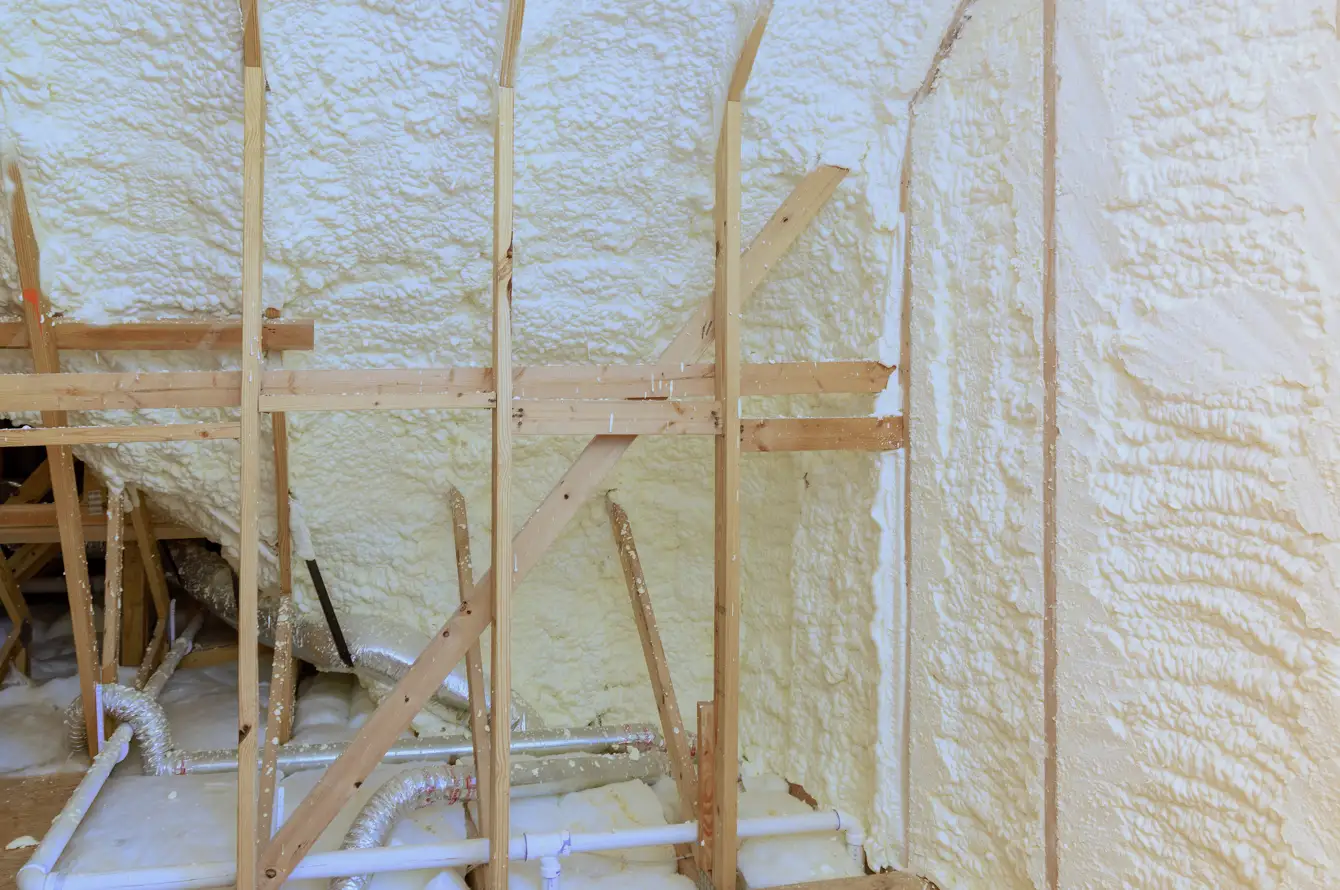
The most important fire safety benefit of spray foam insulation is its ability to create an airtight seal. When gaps are sealed, flames and smoke have fewer pathways to spread through the structure.
This containment effect can:
- Slow fire expansion
- Reduce smoke movement
- Increase evacuation time
Compared to fiberglass or loose-fill insulation, spray foam performs significantly better in controlling airflow during a fire.
Slowing the Spread of Flames
Modern spray foam insulation is manufactured with fire-retardant additives. These materials are designed to resist ignition and slow flame spread when exposed to high temperatures.
Instead of igniting rapidly, spray foam typically chars and hardens. This reaction slows the movement of fire across surfaces and reduces the speed at which flames travel through walls and ceilings. This delay is critical during emergencies.
Blocking Hidden Fire Pathways
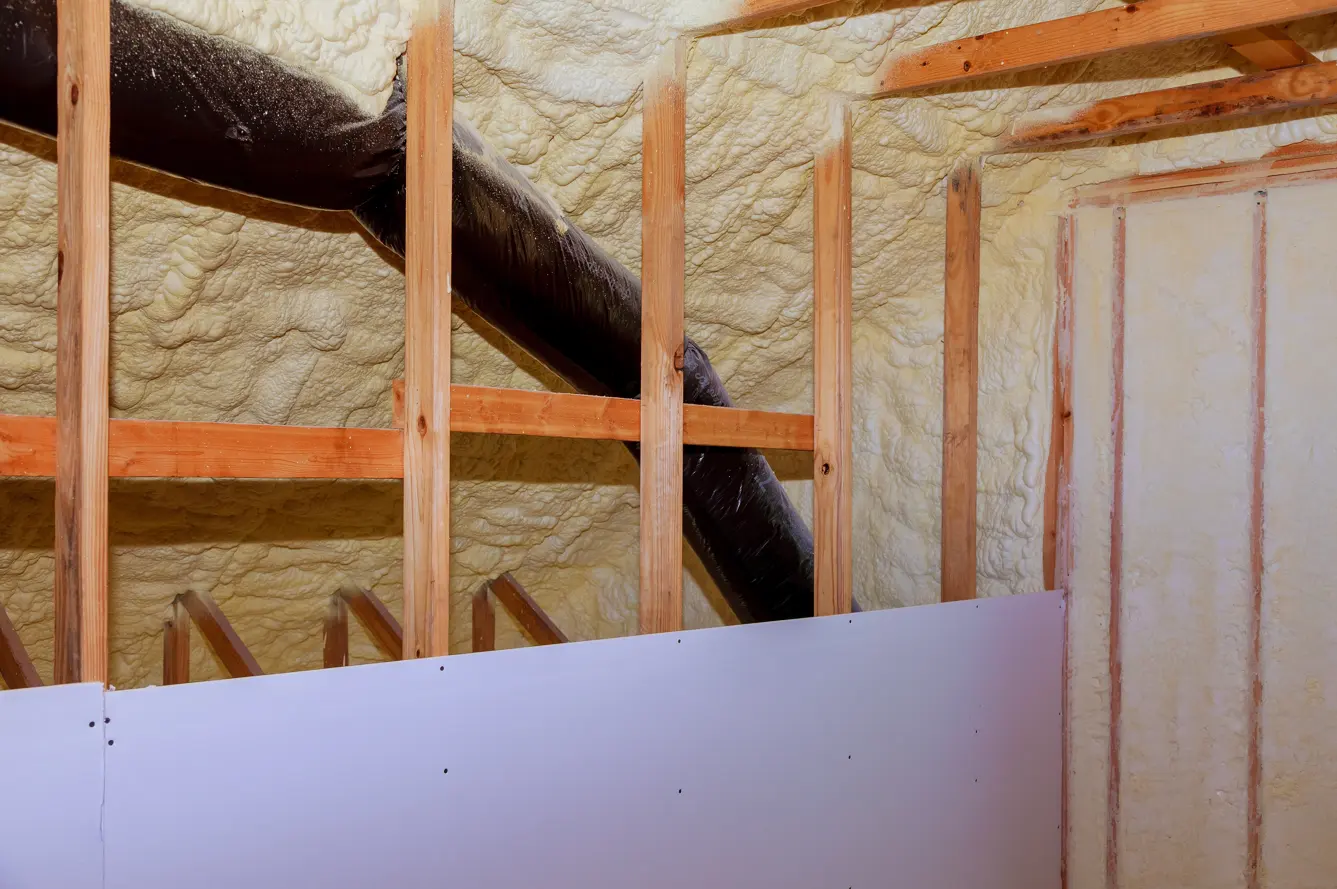
Many fires spread through concealed spaces before they become visible. Wall cavities, attic voids, and floor gaps often allow fire to move unnoticed. Spray foam insulation fills these spaces completely, limiting fire travel in hidden areas.
This makes spray foam especially valuable in multi-story buildings, older homes, and commercial properties where concealed fire movement is a serious concern.
Read more: Is Spray Foam Insulation Worth It for NYC Homes?
Is Spray Foam Insulation Fireproof?
Spray foam insulation is not fully fireproof, but it is fire-resistant and designed to meet building safety standards. When exposed to direct flame, spray foam does not support rapid fire growth.
Building codes require spray foam to be protected by a thermal barrier, such as drywall. This barrier significantly improves fire resistance and ensures the insulation meets safety regulations.
Closed-Cell vs Open-Cell Spray Foam for Fire Safety
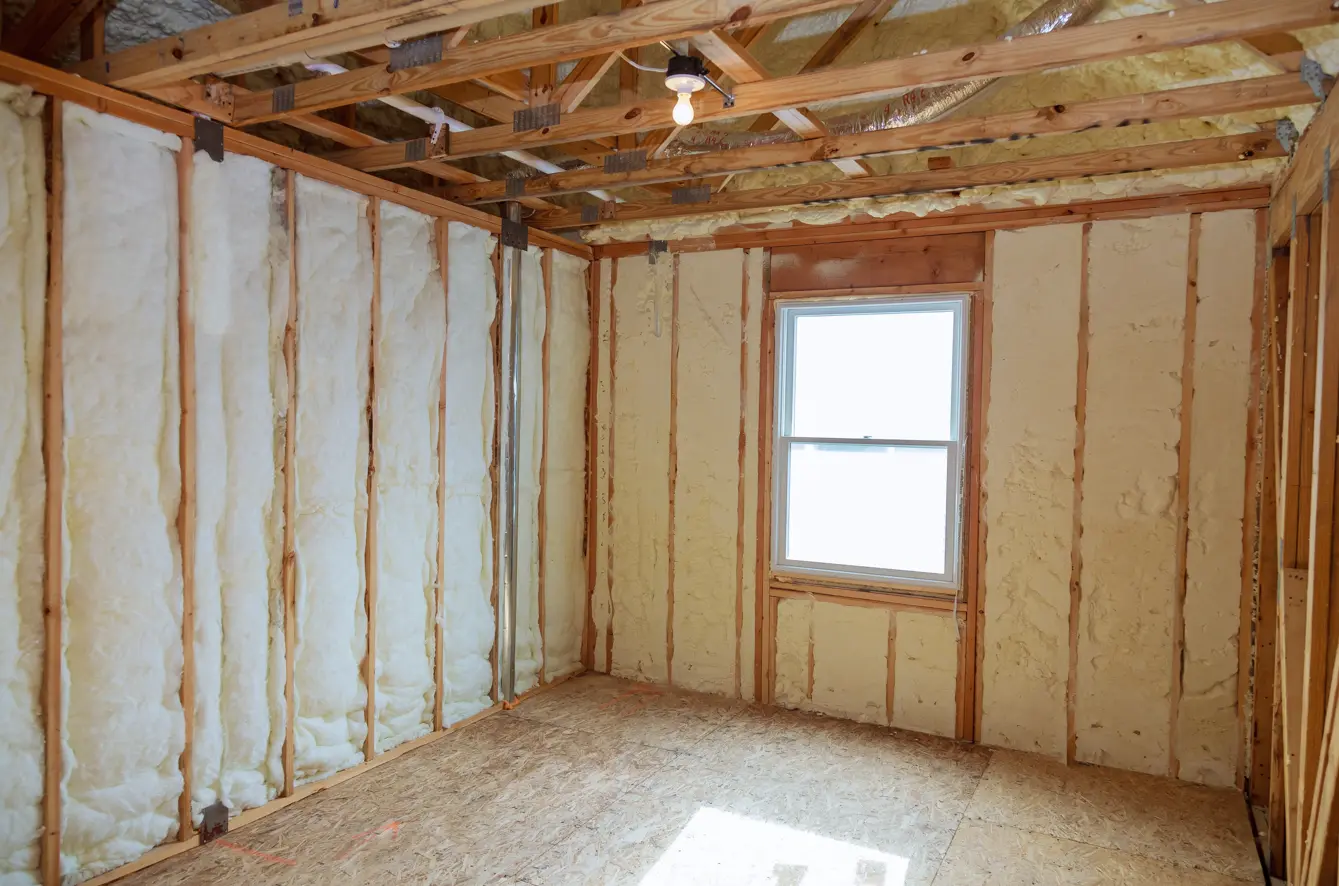
Closed-cell spray foam ranks higher for fire safety due to its density and strength. It resists heat more effectively and adds structural support, helping buildings remain stable longer during a fire.
Open-cell spray foam still provides air sealing benefits but has a lower density. It is typically paired with additional fire-resistant coatings to meet safety requirements. Both types are safe when installed correctly and used according to code.
Smoke Control and Indoor Safety
Smoke inhalation is one of the leading causes of injury during fires. Spray foam insulation helps reduce smoke spread by sealing openings that allow smoke to move between rooms and floors.
By slowing smoke travel, spray foam improves visibility and breathing conditions, giving occupants more time to exit safely.
Building Codes and Safety Compliance
Spray foam insulation must comply with fire safety codes that regulate flame spread and smoke development. These standards ensure that the insulation performs safely in real-world conditions.
Proper installation is essential. Certified professionals ensure the correct foam type, thickness, and protective barriers are used. When installed properly, spray foam insulation meets or exceeds safety expectations in most building types.
Comparing Spray Foam to Traditional Insulation
Traditional insulation materials often fail to provide effective fire protection due to air gaps and material limitations. Fiberglass insulation does not stop airflow and can melt under extreme heat. Cellulose insulation, while treated for fire resistance, can settle and leave exposed spaces over time.
Spray foam insulation consistently ranks higher because it combines insulation, air sealing, and fire resistance into one system that remains effective long-term.
Additional Safety Benefits Beyond Fire Protection
Spray foam insulation contributes to overall building safety by reducing moisture intrusion and limiting mold growth. Moisture control helps maintain structural integrity, which is crucial during high-heat events like fires.
Stronger, drier structures perform better under stress and offer improved protection during emergencies.
Clearing Common Misunderstandings
Some believe spray foam insulation increases fire risk. In reality, fire-rated spray foam is engineered to resist ignition and slow fire movement. Others think spray foam replaces fire safety systems. While it enhances protection, it works best alongside alarms, sprinklers, and proper escape planning.
Best Practices for Maximum Fire Safety
To maximize fire safety benefits, homeowners and builders should:
- Use fire-rated spray foam products
- Install approved thermal barriers
- Follow local building codes
- Hire licensed installers
These steps ensure spray foam insulation performs safely and effectively.
Install Spray Foam Insulation in NYC Today and Keep Yourself Safe
Install spray foam insulation in NYC today to improve fire safety, comfort, and energy efficiency in your home or commercial space.
Spray foam seals gaps and cracks that allow heat, smoke, and air to move freely, helping slow fire spread and improve indoor safety.
At Foam Masters USA, we install high-quality spray foam insulation designed to meet building codes and safety standards across New York City. Our professional installation helps reduce moisture issues, strengthen structures, and create a safer indoor environment year-round.